Port of Singapore
Strategic Positioning and Operations
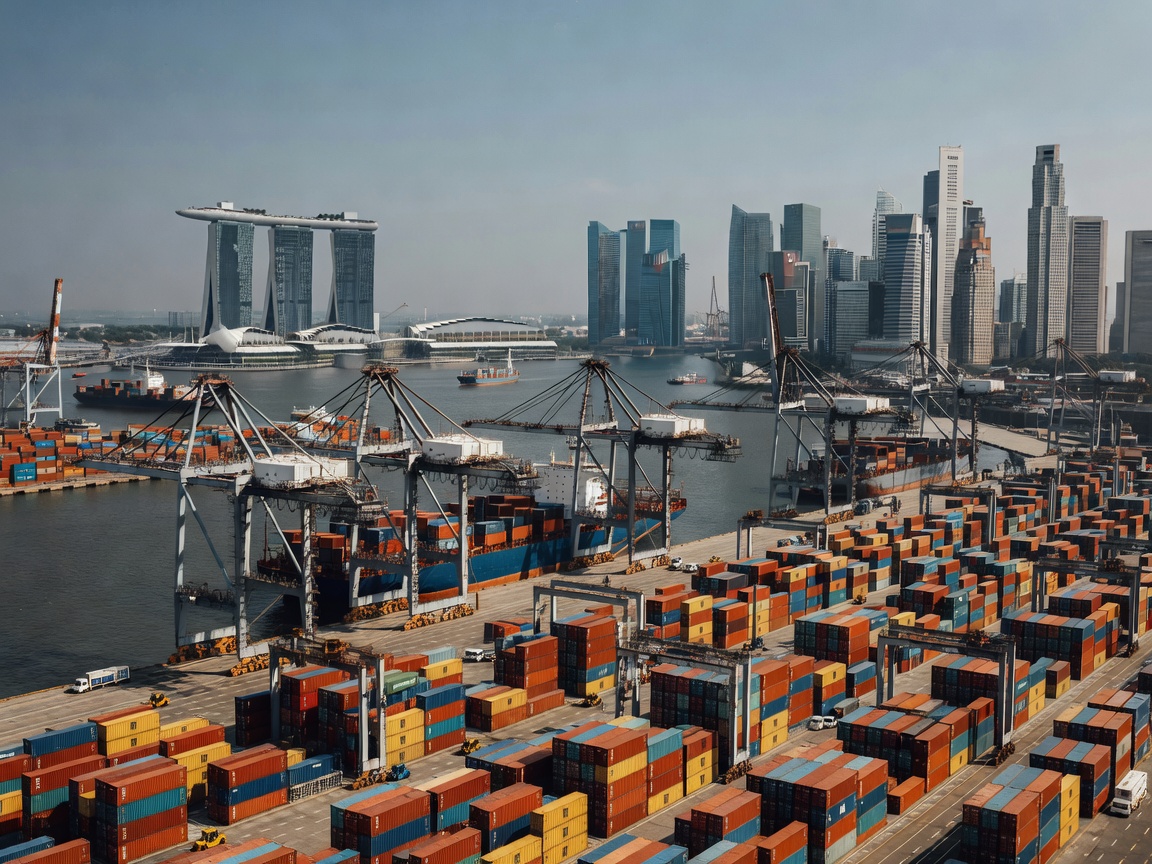
Situated at the southern tip of the Malay Peninsula, the Port of Singapore commands one of the most strategically vital maritime choke points on Earth: the Strait of Malacca. As a result, it is not merely a gateway for domestic imports and exports—it is the world’s foremost transshipment hub. A vast percentage of the containers that arrive in Singapore do not stay there; instead, they are transferred from deep-sea mega-vessels onto smaller feeder ships destined for regional ports across Southeast Asia and Oceania, or vice versa.
This "hub-and-spoke" model requires a level of operational efficiency that borders on the extraordinary. Dwell times—the amount of time a container spends sitting in the terminal yard—are aggressively minimized through hyper-optimized logistics algorithms. Vessels arrive, are unloaded and reloaded with staggering speed, and depart on strict schedules, ensuring the global supply chain operates like a well-oiled machine.
Current Infrastructure: Pasir Panjang and Keppel
For decades, terminals located at Keppel, Brani, and Tanjong Pagar formed the backbone of Singapore's maritime operations, lying in close proximity to the central business district. However, as trade volumes exploded, the focus shifted to the massive Pasir Panjang Terminal facilities. Boasting deep-water berths equipped with cranes capable of reaching across the widest modern vessels, Pasir Panjang represents the current zenith of Singapore’s active cargo handling capability.
These terminals are highly integrated with digital systems that monitor container movements in real-time. Port operators use advanced predictive analytics to pre-stage containers in the yard based on expected vessel arrival times and loading sequences, dramatically reducing the distance cranes and trucks need to travel during active operations.
The Future: Tuas Mega Port
Despite its current dominance, land scarcity is a perpetual challenge for the island nation. In response, Singapore is undertaking a colossal infrastructure consolidation project known as the Tuas Mega Port. When fully completed in the 2040s, all existing container operations will be relocated to this single, sprawling facility built largely on reclaimed land at the western edge of the island.
The Tuas Mega Port is designed to be the largest fully automated terminal in the world in a single location. It will feature an entirely electric fleet of automated guided vehicles, drastically reducing greenhouse gas emissions. Furthermore, its design incorporates futuristic elements such as multi-story container storage and underground logistics networks, aiming to maximize capacity while minimizing the physical footprint on the island.
Economic and Geopolitical Importance
The maritime industry is a foundational pillar of Singapore's economy, contributing significantly to its Gross Domestic Product and providing substantial high-value employment. Beyond direct revenue, the port's efficiency ensures that Singapore remains a highly attractive location for multinational corporations seeking a reliable logistics hub for their Asian operations.
In a world characterized by shifting trade alliances and fluctuating supply chain reliability, the Port of Singapore offers a beacon of stability. Its commitment to technological innovation, political neutrality, and relentless operational excellence ensures that it will remain the vital crossroad of East-West global trade for the foreseeable future.