Port of Shanghai
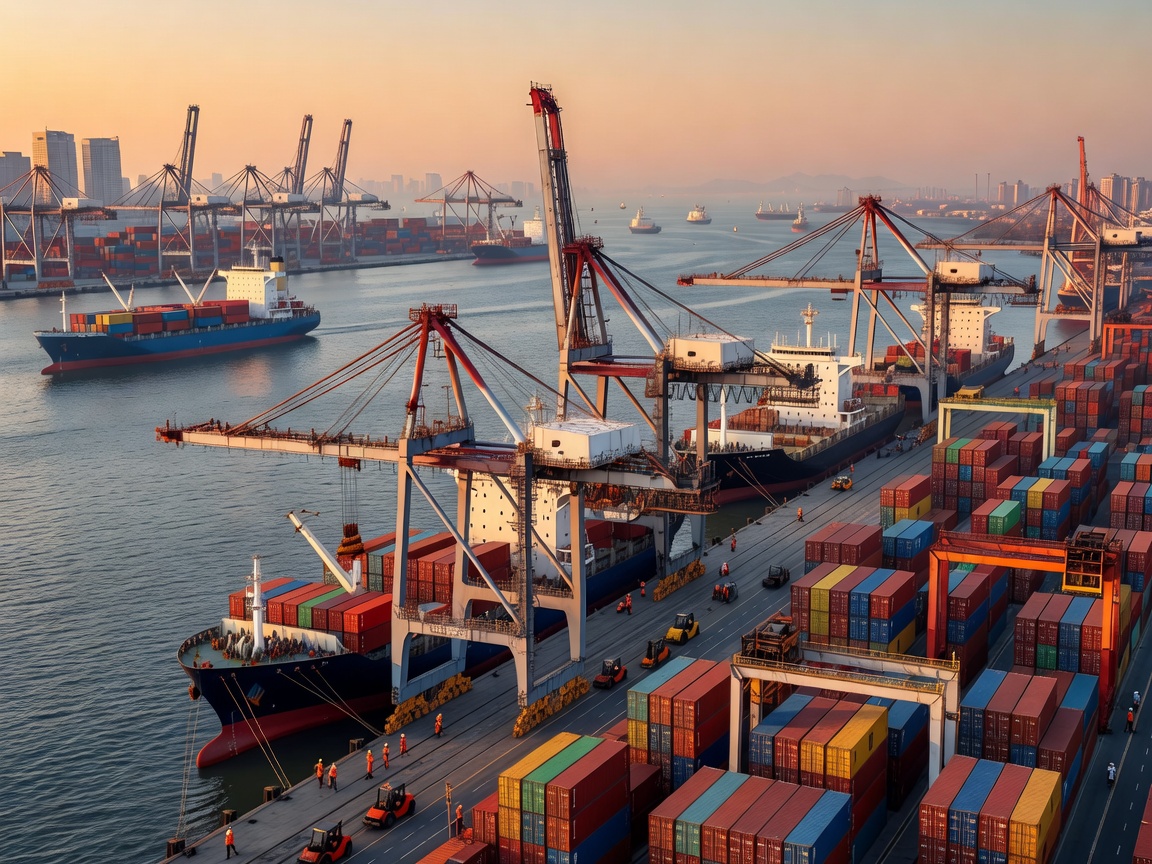
Overview and Scale
The Port of Shanghai stands as an undisputed titan in the global maritime industry. Positioned at the mouth of the Yangtze River, this massive logistical nexus operates as the primary gateway for China’s vast manufacturing heartland. By seamlessly connecting inland river transport with deep-sea maritime routes, Shanghai has cemented its place as the busiest container port in the world, processing tens of millions of TEUs (Twenty-foot Equivalent Units) year after year without pause.
The sheer scale of the port is staggering. It spans thousands of square kilometers of water and land, encompassing multiple operating zones. Rather than a single set of docks, the Port of Shanghai is a conglomerate of various terminal facilities, including the Wusongkou, Waigaoqiao, and the famously ambitious Yangshan Deep Water Port. This geographical distribution allows the port to cater to an incredibly diverse range of cargo types, from bulk raw materials like coal and ore to advanced consumer electronics.
The Yangshan Deep Water Port
Historically, one of the primary constraints holding back Shanghai's maritime ambitions was the shallow draft of the Yangtze River estuary. As modern container vessels evolved to become ever larger, they required deeper waters than traditional inland berths could provide. To solve this, Chinese engineers embarked on one of the most ambitious maritime infrastructure projects in history: the Yangshan Deep Water Port.
Constructed on a group of rugged islands in the Hangzhou Bay, miles away from the mainland, the Yangshan port offers the extreme water depths necessary to accommodate the latest generation of Ultra-Large Container Vessels (ULCVs). It is connected to the mainland via the Donghai Bridge—a structural marvel stretching over 30 kilometers across the sea. This strategic expansion ensured that Shanghai would not be bypassed by the largest mega-ships traversing the Asia-Europe trade lanes.
Technological Advancements and Automation
In recent years, the emphasis at the Port of Shanghai has shifted from purely expanding physical capacity to radically enhancing operational efficiency through technology. The Yangshan Phase 4 automated terminal is a prime example of this evolution. It is widely recognized as one of the largest and most advanced automated container terminals on the globe.
At this terminal, the roar of diesel engines has been replaced by the quiet hum of electric Automated Guided Vehicles (AGVs) navigating a strict, sensor-driven grid. Bridge cranes and gantry cranes operate autonomously or are remotely controlled by personnel in comfortable office spaces kilometers away. This level of automation drastically reduces the risk of human error, enhances nighttime and bad-weather operations, and significantly lowers the carbon footprint of port activities by operating entirely on electricity.
Economic Impact and Future Outlook
The economic ripple effect of the Port of Shanghai is difficult to overstate. It anchors the Yangtze River Delta economic zone, one of the most dynamic and wealthy industrial regions in the world. The port facilitates imports of critical raw materials and acts as the funnel through which Chinese manufacturing output reaches global consumers in Europe, the Americas, and Africa.
Looking ahead, the Port of Shanghai continues to focus on digitalization and green port initiatives. Shore power connectivity—allowing ships to plug into the local electrical grid and turn off their auxiliary engines while docked—is being rapidly rolled out to improve local air quality. Moreover, investments in blockchain-based maritime documentation and AI-driven predictive logistics are set to keep Shanghai at the bleeding edge of the global shipping industry for decades to come.