Port of Rotterdam
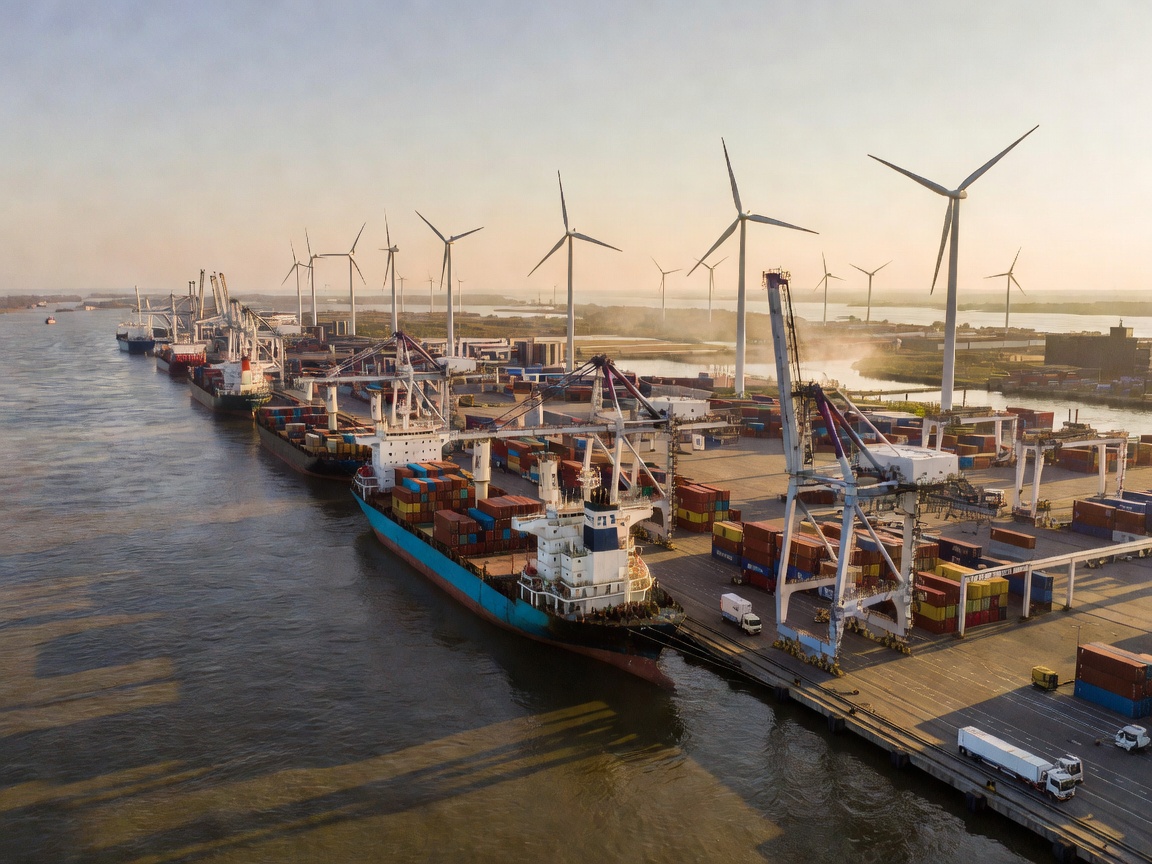
The Gateway to Europe
Stretching over 40 kilometers from the city center of Rotterdam to the shores of the North Sea, the Port of Rotterdam is an industrial powerhouse without equal in Europe. For decades, it held the title of the world's busiest port before the explosive growth of Asian maritime hubs. However, it remains the undisputed main artery for goods entering and leaving the European continent, boasting deep waters, no locks, and an unmatched location at the delta of the Rhine and Meuse rivers.
The port's geography is its greatest asset. It offers immediate access to a dense network of inland waterways, railways, and highways that permeate deep into the industrial heartlands of Germany, France, Switzerland, and Eastern Europe. This multimodal hinterland connectivity means goods arriving in Rotterdam can be efficiently dispersed across the continent with remarkable speed.
Maasvlakte 1 and 2: Expanding into the Sea
Faced with land constraints within the heavily populated Netherlands, port authorities looked to the sea for expansion. The development of the Maasvlakte (Meuse Plain) and its subsequent expansion, Maasvlakte 2, are legendary feats of Dutch hydraulic engineering. By reclaiming land directly from the North Sea, Rotterdam added thousands of hectares of new industrial and deep-water terminal space.
Maasvlakte 2 specifically was designed with the future in mind. It accommodates the deepest draft vessels in existence and hosts some of the most technologically advanced container terminals on the planet. Here, electric, automated straddle carriers silently move containers under the supervision of AI-driven logistics systems, maximizing throughput while minimizing human intervention in hazardous zones.
Energy Transition and Sustainability
Beyond containers, the Port of Rotterdam has historically been a massive hub for petrochemicals, housing numerous refineries and liquid bulk storage facilities. Recognizing the global shift toward decarbonization, the port authority has embarked on an aggressive strategy to become a central node in Europe's energy transition.
Massive offshore wind farms in the North Sea connect directly to the port’s grid. There are extensive plans in motion for the production, importation, and distribution of green hydrogen, aiming to replace fossil fuels in heavy industry and heavy-duty transport across Northwestern Europe. The port is also exploring carbon capture and storage (CCS) initiatives, piping captured CO2 from industrial processes into empty gas fields beneath the North Sea.
Digital Twin and Smart Port Initiatives
Rotterdam is at the forefront of the "Smart Port" movement. Through a massive network of IoT (Internet of Things) sensors tracking everything from weather and water levels to ship movements and infrastructure stress, the port has created a comprehensive digital twin of its physical environment. This digital replica allows operators to simulate scenarios, optimize berthing schedules dynamically, and predict maintenance needs before failures occur.
This commitment to digitalization, combined with relentless infrastructure development and a visionary approach to sustainability, ensures that the Port of Rotterdam will remain a cornerstone of European commerce and a global benchmark for maritime innovation.