Port of Jebel Ali
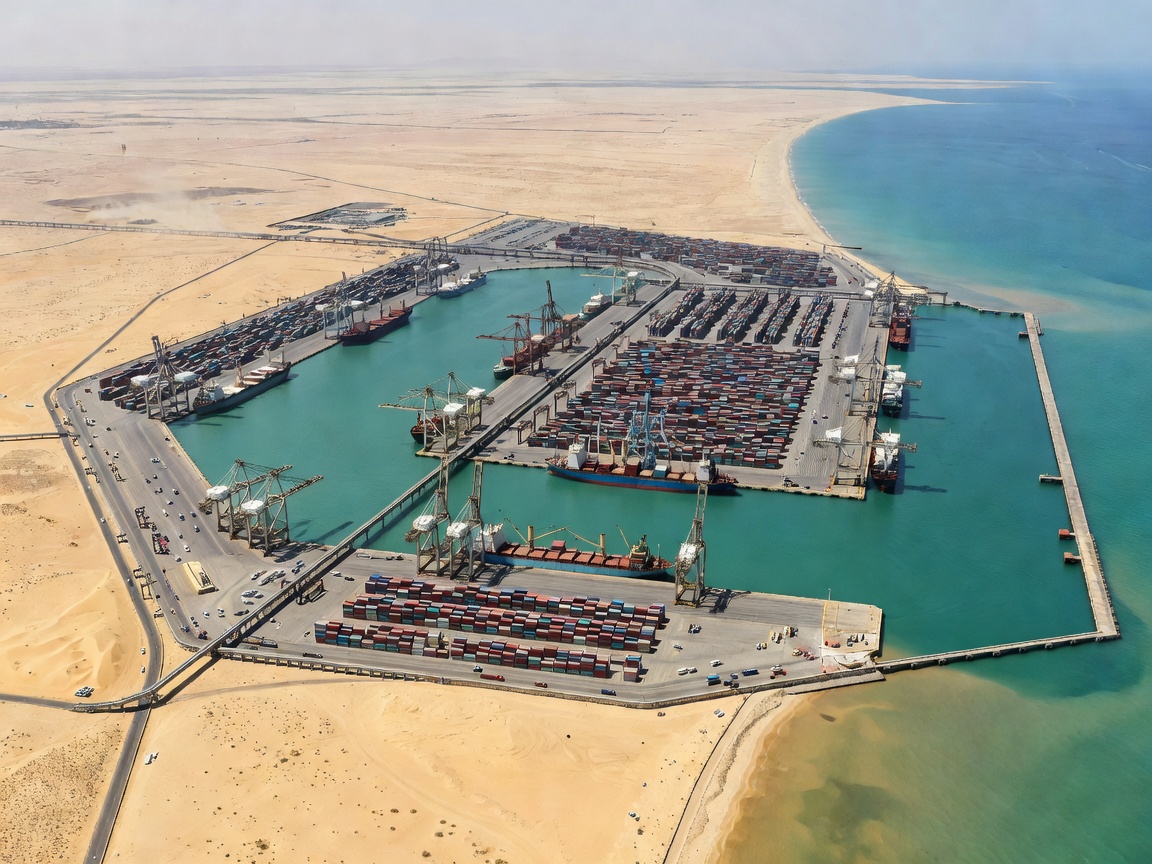
A Monument to Vision and Engineering
Located on the coast of Dubai in the United Arab Emirates, the Port of Jebel Ali stands as a testament to transformative infrastructure investment. Constructed in the late 1970s, it holds the title of the largest man-made harbor in the world. Operated by the global logistics giant DP World, Jebel Ali is not just a regional asset; it is a critical pivot point connecting trade routes between the East and the West, serving a massive market footprint spanning the Middle East, Africa, and South Asia.
Unlike historical ports that grew organically over centuries, Jebel Ali was master-planned to accommodate the future of maritime trade. Its expansive basins and deep-water berths easily accommodate the world's largest container ships, while roll-on/roll-off (RoRo) terminals handle an immense volume of vehicular trade, solidifying its reputation as a highly versatile cargo gateway.
JAFZA: The Engine of Economic Growth
What truly sets Jebel Ali apart from its global peers is its seamless integration with the Jebel Ali Free Zone (JAFZA). Established to attract foreign direct investment, JAFZA offers international businesses zero corporate tax, no currency restrictions, and 100% foreign ownership. Today, it is home to thousands of companies, from light manufacturing to massive distribution centers for global consumer brands.
The symbiotic relationship between the port and the free zone creates a powerful logistical ecosystem. Raw materials or finished goods arrive at the docks, are transported mere kilometers into the free zone for assembly, repackaging, or storage, and are then redistributed globally via sea, air, or land. This frictionless environment significantly reduces supply chain costs and transit times for multinational corporations.
Multimodal Connectivity
Jebel Ali's value proposition is heavily reliant on its multimodal capabilities. The port forms the maritime anchor of the Dubai Logistics Corridor, which links the seaport directly to the Al Maktoum International Airport via a single, bonded customs zone. This allows high-value, time-sensitive cargo to transition from sea freight to air freight in a matter of hours, a capability that is particularly valuable in the electronics and pharmaceuticals sectors.
Furthermore, ongoing investments in regional rail networks aim to connect the port to the broader Gulf Cooperation Council (GCC) countries, providing a robust, high-volume alternative to road transport across the Arabian Peninsula.
Embracing Technological Innovation
As a flagship facility for DP World, Jebel Ali frequently serves as a testing ground for cutting-edge supply chain technologies. The port utilizes an array of automated processes, from optical character recognition (OCR) systems at the terminal gates to AI-driven terminal operating systems that optimize the movement of cranes and trucks.
The commitment to innovation extends to experimental technologies, including research into high-speed vacuum tube transport systems for cargo, which could eventually move containers inland at airline speeds. By continuously investing in digitalization, security, and advanced logistics infrastructure, the Port of Jebel Ali ensures its position at the vanguard of the global maritime industry.